


Leica M-A Hammertone
Disponible por lista de pedidos anticipados
Throughout Leica's history, certain special finishes have become legendary among collectors and enthusiasts. Few are as unusual as Hammertone, a distinctive textured paint finish with roots in German industrial design dating back to the 1930s. While commonly associated with precision... Leer más...
- Ver accesorios recomendados
- ¿Preguntas sobre este producto? Escriba a info@leicastoremiami.com
Detalles
-
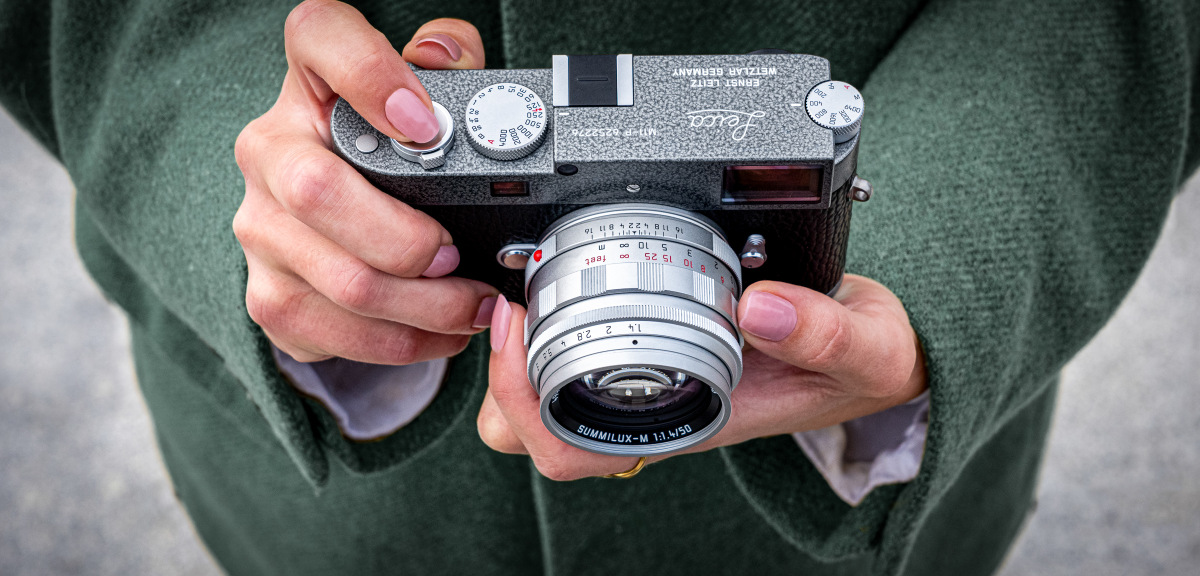
Throughout Leica's history, certain special finishes have become legendary among collectors and enthusiasts. Few are as unusual as Hammertone, a distinctive textured paint finish with roots in German industrial design dating back to the 1930s. While commonly associated with precision instruments and technical equipment, Hammertone was used on only a handful of Leica camera models, including an exceptionally rare series of just ten Leica MD cameras produced in 1964.
With the introduction of the Leica M-A Hammertone, this historic finish makes a welcome return, paired with one of the purest expressions of the Leica M camera.
The Hammertone effect is created through a specialized painting process in which metallic pigments and additives produce subtle variations in surface tension as the paint dries. The result is a beautifully textured surface with a unique appearance that varies slightly from camera to camera. Recreating this finish required Leica to re-engineer the process, with experienced craftspeople in Wetzlar carefully applying the paint to achieve its characteristic appearance.
The M-A Hammertone features solid brass top and base plates finished in Hammertone, with contrasting silver controls featuring traditional cross knurling, white engravings, and a black vulcanite-style leatherette covering. The combination gives the camera a distinctly vintage appearance, reminiscent of the specialized Leica equipment and rare special editions of decades past.
Mechanically, the M-A Hammertone is identical to the standard Leica M-A. With no electronics, batteries, or built-in exposure meter, it offers a completely manual photographic experience. From advancing the film and setting the exposure to focusing and releasing the shutter, every aspect of making a photograph remains entirely in the hands of the photographer.
Combining a finish rarely seen in Leica's history with the timeless mechanical design of the M-A, the Leica M-A Hammertone is a particularly special addition to the Leica M family, equally appealing to dedicated film photographers and collectors.
Please note, while the Leica M11-P Hammertone and Leica M-A Hammertone are special edition cameras, they are not individually numbered editions. Availability is expected to be limited.
-
- Hammertone finish on the top plate and base plate, formed as metal pigments and additives vary the surface tension while drying, so each camera's texture is unique
- Process reworked by Leica and applied by the Leica Manufacture team in Wetzlar; follows rare Leica hammertone references including the 1964 Leica MD Hammertone and 2011 M9 Hammertone
- Solid brass top and base plates, classic cross knurling on the controls, shiny silver shutter-release plate, white engravings, and black vulcanite-style leatherette covering
- Fully mechanical 35 mm rangefinder (Leica M-A, type 127): manual aperture, shutter speed, and film ISO, with no built-in exposure meter
- Mechanically controlled, low-noise horizontal rubberized-cloth focal plane shutter, 1 s to 1/1000 s plus B
- 0.72x bright-line viewfinder with frame pairs for 28/90, 35/135, and 50/75 mm, automatic parallax compensation, and a 49.9 mm effective rangefinder base
- Leica M-Bayonet for M-Lenses from 16 to 135 mm
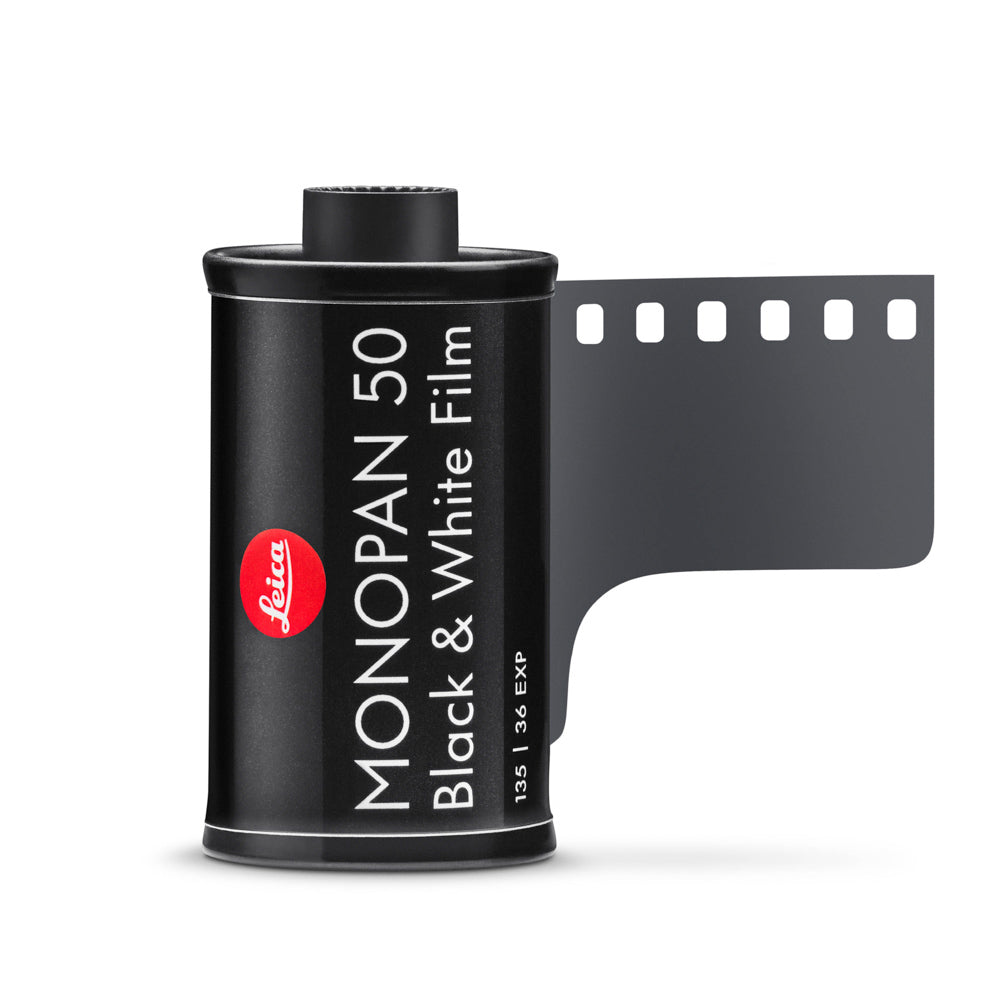
- Ships with a roll of Kodak TRI-X 400 film, strap, Quick Start Guide, and registration leaflet
-
Camera type Leica M-A (type 127) compact 35 mm rangefinder system camera with a mechanically controlled shutter Edition Hammertone special edition; technically based on the standard Leica M-A Finish Hammertone finish on top plate and base plate; each camera unique due to its distinct surface finish Design details Solid brass top and base plates; classic cross knurling on control elements; shiny silver shutter-release plate; white engravings; black vulcanite-style leatherette covering Lens mount Leica M-Bayonet Lens system Leica M-Lenses, 16–135 mm Exposure control Manual setting of shutter speed and aperture with values from an external exposure meter or by estimation Flash connection Hot shoe (accessory shoe with center contact) Flash synchronization On first shutter curtain Flash exposure control Computer control by the flash unit, or guide number calculation and manual setting of the required aperture value Viewfinder principle Large, bright, combined bright-line viewfinder with automatic parallax compensation Eyepiece Adjusted to –0.5 diopters; correction lenses available for –3 to +3 diopters Image field framing Projected pairs of bright-line frames for 28 and 90 mm, 35 and 135 mm, 50 and 75 mm lenses; corresponding frames displayed automatically when lenses are locked into the bayonet mount Frame selector Lever enabling alternative frame pairs to be displayed without changing lenses (e.g. for framing comparisons) Parallax compensation Horizontal and vertical differences between viewfinder and lens axes automatically compensated in relation to focusing distance Viewfinder/film image concordance Bright-line frame size corresponds to an image size of approx. 23 × 35 mm at the minimum focusing distance for all focal lengths; focused at infinity, approx. 9% (28 mm) to 23% (135 mm) more is captured on film than shown in the frame, depending on focal length Magnification 0.72× (for all lenses) Rangefinder Long-base coincident and superimposed image rangefinder, shown as a bright field at the center of the viewfinder image Effective rangefinder base 49.9 mm (mechanical rangefinder base 69.25 mm × viewfinder magnification 0.72×) Shutter Horizontal rubberized-cloth focal plane shutter; extremely low noise; mechanically controlled Shutter speeds 1 s to 1/1000 s in one-stop increments; B for exposures of arbitrary length Shutter release Standard internal thread for remote-release cables Film loading Manual loading after removal of the base and opening the rear flap Film advance Manual with rapid wind lever or Leicavit M; motorized with Leica Motor-M, Leica Winder-M, Leica Winder M4-P, or Leica Winder M4-2 (from article number 10 350) Rewinding Manual, pull-out rewind knob after disconnecting the advance mechanism with the R-lever on the front of the camera Frame counter On top plate; automatically reset when baseplate is removed Body material One-piece full-metal body with rear flap; top deck and baseplate in brass (hammertone finish on this edition) Tripod bush Thread A 1/4, DIN 4503 (1/4") Rear flap Reminder dial for film sensitivity Dimensions (L × D × H) Approx. 138 × 38 × 77 mm Weight Approx. 578 g (net weight 20.39 oz) Gross (shipping) weight 59.26 oz Mfr part # 10380 -
- Leica M-A Hammertone
- Quick Start Guide
- Strap
- Registration leaflet
- Kodak TRI-X 400 film

Leica M-A Hammertone en Red Dot Forum
Nuestra cobertura del lanzamiento.
Accesorios recomendados

Elige una opción
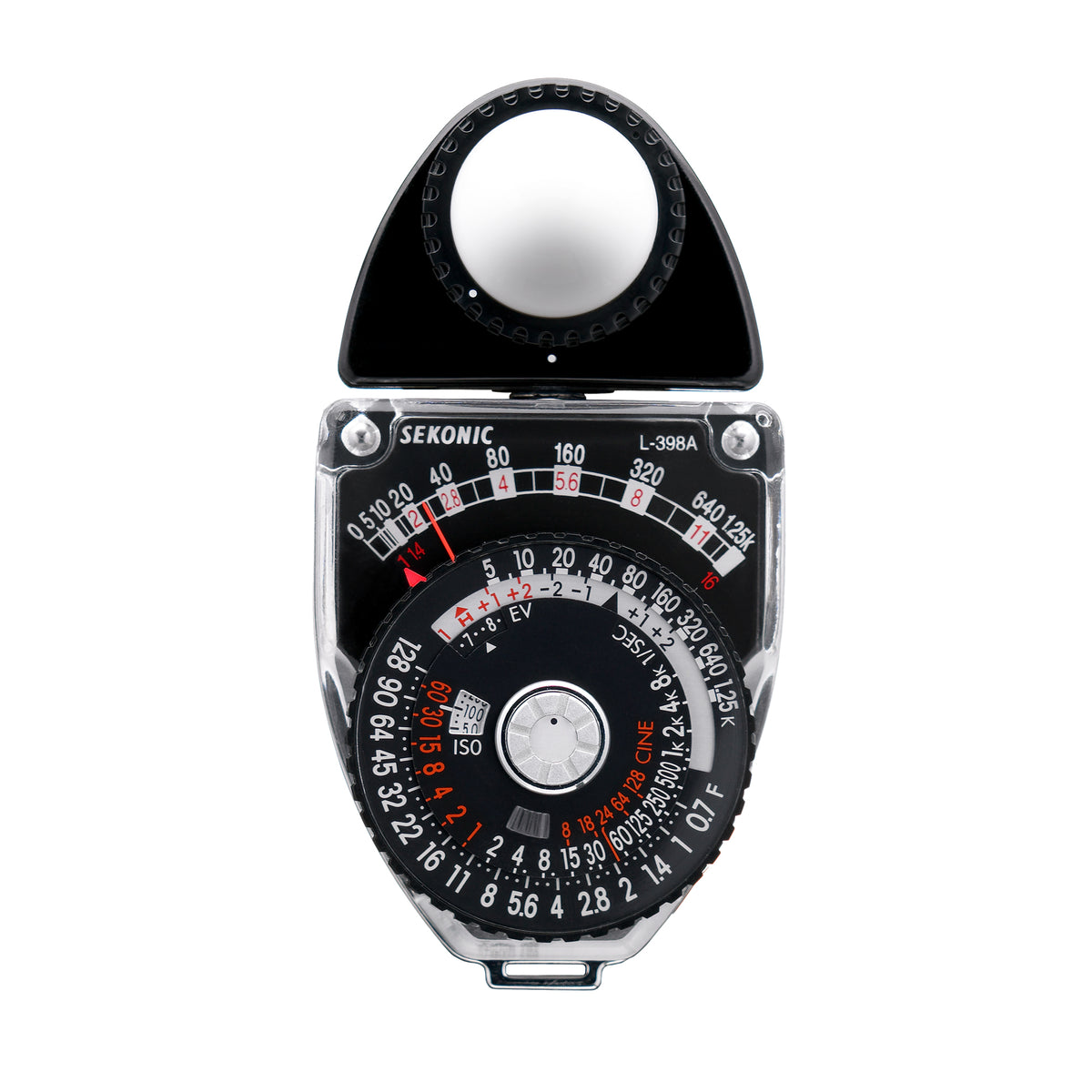

Sekonic L-398A Studio Deluxe III Analog Light Meter
En existencia
Elige una opción


Sekonic L-308X-U Flashmate Light Meter
En existencia
Elige una opción
Arte di Mano Half Case for Leica M-A (2026 Version) - Rally Black with Black Stitching
Sin existencia